Stamped concrete services in Pleasanton CA - even color and joints that blend in
Tired of a cracked or plain gray patio? We pour, color and stamp a slab that looks like stone, brick or wood.
- Licensed and fully insured.
- Free in-person estimates.
- We reply within 1 business day.
What does stamped concrete involve, and is it right for your patio or driveway?
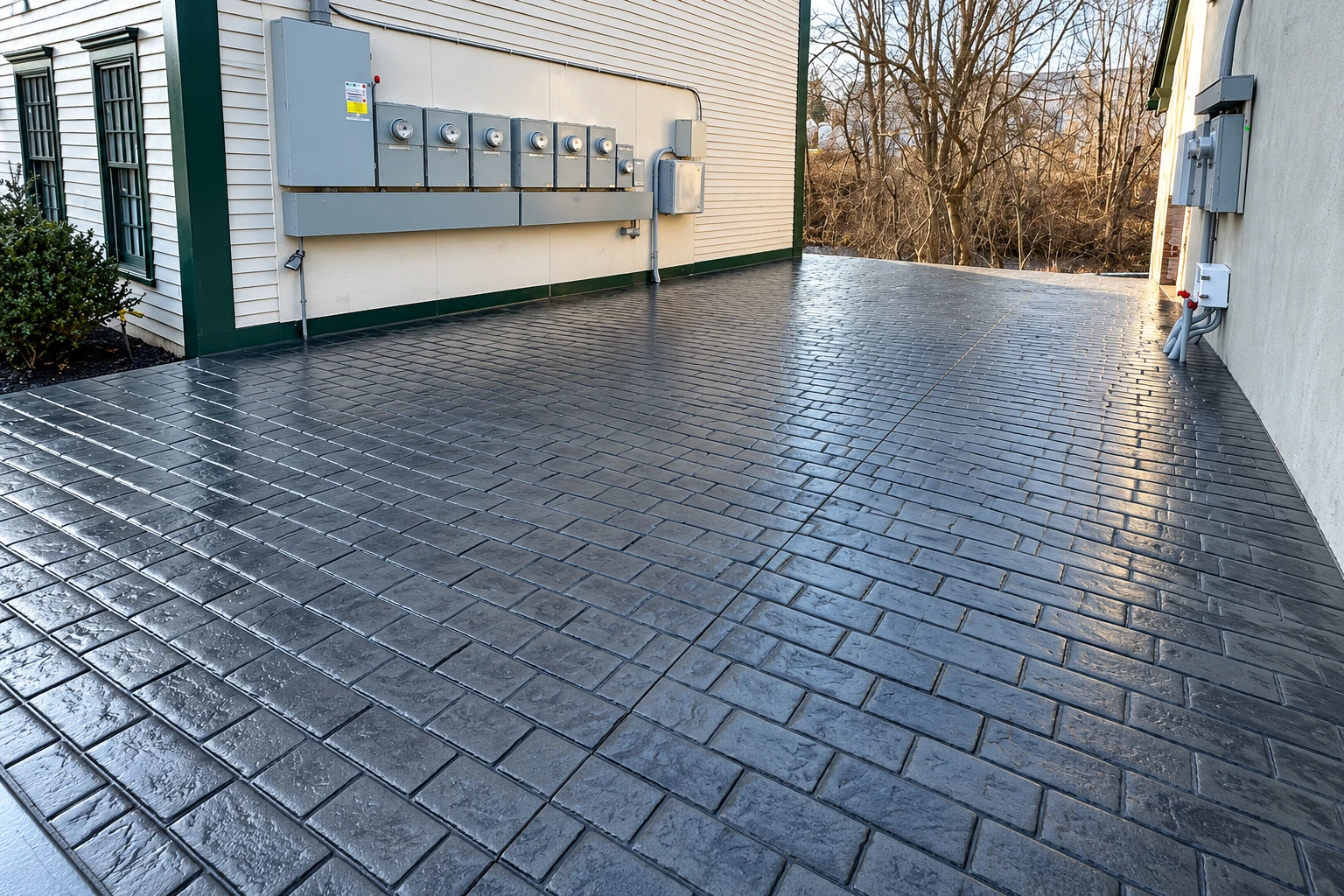
Our stamped concrete services in Pleasanton, CA give you a poured slab that's colored, pressed with rubber pattern mats while it's still soft and then sealed. Your patio, walk or driveway gets the look of stone, brick, wood or tile in one piece of concrete.
Most people call us when an old patio or entry is cracked, sinking or just plain gray, and they want something that looks like stone or brick without laying pavers. The price moves with the size, the pattern and colors you pick, how much old concrete has to come out and how much base work the ground needs. The schedule depends on whether a permit applies and on how long you have to wait before you can walk or drive on the new slab. If you're starting a backyard from bare dirt, our concrete patio construction page covers building the slab itself, and either way my written estimate puts each of those costs on its own line.
Is stamped concrete right for your home?
A cracked slab coming out
If the old patio or walk has to be replaced anyway, the new pour can carry a pattern.
Stone look, one slab
You like the look of stone or brick but would rather have one poured slab than pavers.
An entry people see
A front walk, landing or courtyard is where a pattern and color do the most for the house.
You'll keep up the sealer
Stamped concrete suits owners who are willing to reseal it every few years so the color holds.
How we do stamped concrete
I lay the job out first and check where the water will run, because a slab that slopes toward the house can't be fixed once it's poured. Our crew digs out and packs the subgrade, the dirt and gravel the slab sits on, then sets the forms, and I check them against the plan before the truck shows up. During the pour we spread the color hardener evenly and float it in. Color hardener is a dry powder worked into the top, and spreading it unevenly is what makes stamped concrete look blotchy. We press the pattern mats while the surface is still soft. Then we cut the control joints, planned grooves that tell a crack where to go, along the pattern lines so they blend in. Once the concrete has set, we wash it and seal it. I'll tell you up front that the sealer has to be redone over the years. Near pools and steps we can add traction to the sealer, because a fresh seal can be slick when it's wet.
Stamped work usually sits next to plain concrete, so we look at the pieces around it during the same visit. A stamped landing often ties into the front walk, and concrete sidewalk building lets the walk and the landing come out of one layout. A driveway meets the garage at the door, so if that floor is cracked or sinking, ask about garage floor concrete before we pour.
Stone and slate patterns
These suit patios and pool decks where you want an irregular, natural look. The texture also tends to hide small scuffs better than a smooth pattern does.
Brick and cobble patterns
These suit entries, walks and borders, where straight courses can line up with the house. They read well from the street on a front landing.
Wood plank patterns
These suit a patio beside a deck or under a covered porch, where you want the look of boards without the upkeep of wood. The planks can run with the house or across it.
Stamped border, plain middle
This suits a large driveway or patio where stamping the whole slab is more than you want to spend. We stamp the edge and give the middle a broom finish, a swept texture that gives tires and shoes some grip.
What happens when you call about stamped concrete in Pleasanton?
Call or send the form
Call (925) 468-2730 or send the form with the rough size, the kind of surface and a few photos of the area. We get back to you and set a time for me to come out.
I measure and write it up
I measure, ask what the slab has to carry and where the water should go, then write the estimate line by line. Demolition, base work, pattern, color and sealer each get their own line, so you can see what's in the price and where you could trim it.
We check the forms, then pour
Before the truck shows up, I check the forms against the plan, because once concrete is poured you can't move it. Our own crew does the work, and I'm on site to run the pour.
We tell you when it's ready
When we're done, we tell you plainly when you can walk on the slab and when you can drive on it. We also tell you what the sealer will need down the road.
Where to spend on stamped concrete
On the base, before the pattern.
On day one nobody sees the base, so it's the first thing people want to cut. A pattern pressed onto dirt that was only raked level will settle and crack right along with that dirt, and the nicest stamp in the world won't hide it. That's why we dig out and pack the base every time.
If the budget's tight, I'd rather simplify the pattern or stamp a smaller area than thin out what's underneath. You can always change how a slab looks in other ways, but you can't redo the base without tearing the slab out.
Concrete work examples to browse
Look through these examples of stamped, colored and plain concrete to get a feel for patterns, finishes and edges before we talk.
Get a line-by-line estimate for your stamped concrete
Tell us the rough square footage and whether it's a patio, walk or driveway, and add a few photos of the area. We reply within one business day to set up a free on-site estimate, with no obligation.
Why Pleasanton homeowners call Pleasanton Concrete Company for stamped concrete
The owner prices and checks
I come out to measure and write the estimate myself, and I'm back on site for the pour. The person who priced your job is the one making sure it matches the plan.
Commercial habits, home-sized jobs
I spent years with a big commercial concrete outfit where nothing got poured until it had been checked, and I started this business in Pleasanton in 2023. We've been at it three years, and that habit of checking before the truck arrives comes with us to every patio and walk.
Licensed and insured, easy to check
In California, any job worth $1,000 or more in labor and materials needs a contractor licensed by the Contractors State License Board, and we're licensed and fully insured. Ask for our license number before you sign, so you can quickly check it with the board.
Based here, ready to measure
We're based in Pleasanton and work in the cities around it, across the East Bay and down into the South Bay. Call (925) 468-2730 or send the form with photos of the area, and I'll set a time to come out and measure.
Stamped concrete questions we hear
How much does stamped concrete cost per square foot in Pleasanton?
Installed stamped concrete in San Francisco usually runs about $16 to $34 per square foot. That's the market's figure for the area, not our price. Where your job lands depends on the size, the pattern and colors, and how much old concrete and base work is involved. I'll price your own Pleasanton job once I've measured it.
How long does stamped concrete take to cure before I can drive on it?
Poured concrete typically needs at least 24 hours before anyone walks on it and seven days before a car goes on it. That wait is called curing, the time the concrete takes to harden after the pour. If it's your driveway, plan to park somewhere else for that week, and we'll tell you plainly when it's ready.
How often does stamped concrete need to be resealed?
Common guidance is every two to three years. A driveway or busy entry usually needs it sooner, and a shaded patio can usually go longer. The real schedule depends on the sealer and how much sun and traffic the slab gets, so plan on resealing as a repeat job.
What causes stamped concrete to crack?
Stamped concrete cracks for the same reasons any slab does: it shrinks as it hardens, moves with the ground and carries weight. No one can honestly promise you a slab with no cracks at all. What keeps cracks from showing up where nobody chose is cutting the joints on time and building on a packed base, so we don't skip either one.
What is the best way to color a stamped concrete driveway?
For a driveway, color hardener is usually the better choice, and one field guide calls it the common pick for anything that takes traffic. Worked into the top, it gives rich color and a harder, denser surface that stands up to wear. The trade-off is that the color only goes through the top layer, so a deep gouge will show gray concrete underneath.
Does a stamped concrete driveway need a permit in Pleasanton?
A driveway at ground level may not need a city building permit. That isn't settled for every stamped job, though, and a planning permit or a permit for work near the street can still apply. We confirm what applies to your address before we start, and the section on Pleasanton rules below explains what the city looks at.
Thinking about a stamped patio or driveway?
I come out, measure the area, ask what it has to carry and write up the price line by line.
Work that often goes with it
Stamped concrete permits and rules in Pleasanton
Pleasanton doesn't require a building permit for sidewalks and driveways that meet three conditions. They sit no more than 30 inches above the ground beside them, they aren't over a basement or a story below, and they aren't part of an accessible route, the path built for wheelchair access. The city's list names sidewalks and driveways, not stamped concrete. It also says a planning or zoning permit may still be needed even when a building permit isn't, so patio and zoning questions go to its Planning Division. Before work starts, we confirm which city or county office covers your address. When a permit is needed, we take care of the application and the inspections and keep you posted.
Driveway work that reaches the street needs an encroachment permit, the city's approval for working on public land along the street. That covers repairing the driveway approach and putting in or tearing out concrete between the sidewalk and the curb, and the city asks you to call if you're not sure. We see a lot of front driveways that run right to the curb, here and on jobs in Dublin and San Ramon, so I flag it on the estimate when your job crosses that line.