Concrete driveway building in Pleasanton CA - a slab built for what you park
Cracked, sunken or pooling driveway? We lay it out, pack the base and pour a slab that drains to the street.
- Licensed and fully insured.
- Free in-person estimates.
- We reply within 1 business day.
What goes into building a concrete driveway in Pleasanton?
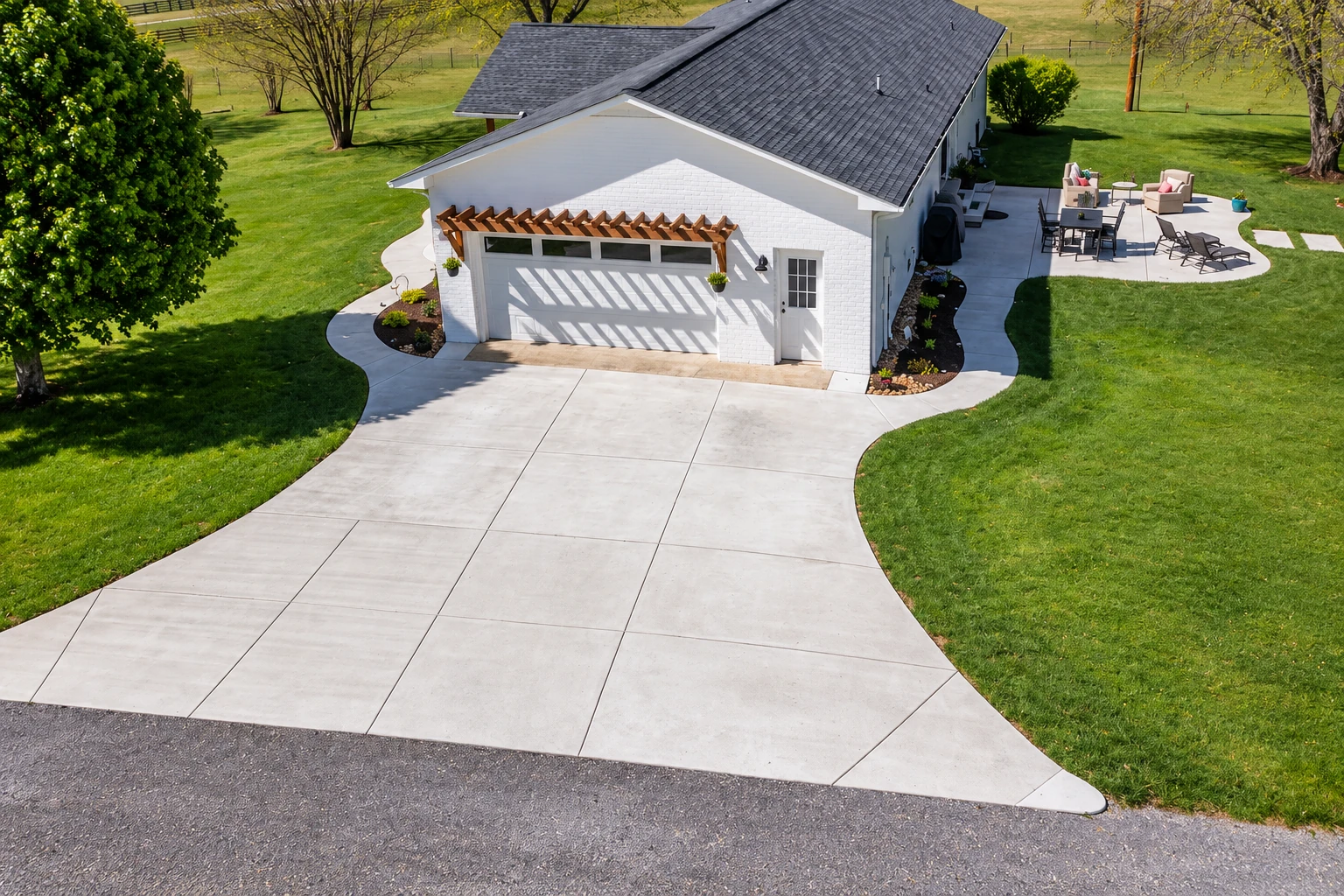
Concrete driveway building in Pleasanton means clearing the old surface or bare ground, packing a firm base, then forming, pouring and finishing a slab that's thick enough for what you park and sloped so water runs to the street. Most of the work happens before any concrete arrives.
If your driveway is cracked, sunk at the street or sending water toward the garage, a new slab is usually the fix, because patching doesn't change what's underneath. The price depends on the size, how thick the slab is, whether it carries steel, whether there's an old driveway to break out and haul off, and how much base work the ground needs. The schedule depends on any city permit for work out at the street, the weather on pour day and the cure afterward, and my estimate is written up line by line so you can see what's in the price before you decide.
Is a new concrete driveway right for your home?
Old slab cracked and sunk
When a driveway has settled and split in several places, patching rarely holds and a new slab does.
Water pooling by the garage
A slab that tips toward the house keeps collecting water until it's rebuilt to fall toward the street.
A heavier truck or trailer
If you now park a pickup, trailer or RV, a thicker slab with steel carries that weight better.
A new or wider garage
A new or wider garage needs a driveway laid out to meet it, with slope set before the pour.
How we build a concrete driveway
I start by talking through thickness and steel based on what you park, and I price each choice so you can see the difference. On the job, our crew breaks out the old driveway if there is one, digs down to firm ground and packs the subgrade, the soil the slab sits on, because a base that's only raked level settles along with the dirt under it. We set the forms so the slope sends water to the street and not back at the garage, place rebar, the steel bars set inside the slab for strength, if you've chosen it, and pour early in the day so the heat doesn't leave a weak, dusty top. Then we give it a broom finish, a light texture so tires and shoes have grip, and cut control joints, planned lines where the slab can crack straight instead of wandering, before it hardens too far. After that it cures, which is the wait while the concrete gains strength before anyone drives on it.
A driveway often sits next to other concrete, and it's easier to plan it all together than to come back later. If you want a backyard slab too, we can handle the concrete patio construction on the same project, and if you'd like pattern and color on a border or apron, that's our stamped concrete services. A front walk can tie into the new slab as well through our concrete sidewalk building work.
Standard broom-finish slab
This suits most homes that park everyday cars and SUVs, because a plain slab on a well-packed base with well-placed joints handles that load. It's where most driveway budgets should start.
Thicker slab with steel
This suits households with a heavy pickup, a trailer or an RV, since extra thickness and steel carry more weight. It costs more up front, and the estimate shows you how much.
Replacing an old driveway
This suits homes with a cracked or sunken slab, where we break out and haul away the old concrete before building a new base. The tear-out gets its own line on the estimate because it adds to the price.
What happens after you call about a driveway
Call or send the form
Call (925) 468-2730 or send the form, and we'll set a time for me to come look at the driveway. It helps to know its rough size and what you park on it.
I measure and write it up
I measure, ask what the concrete has to carry and where the water should go, then write the estimate line by line. You'll see what thickness, steel, tear-out and base work each add, so you can choose with the numbers in front of you.
Permit, forms, then the pour
If the work reaches into the street right of way, the city usually issues the encroachment permit the same day, though one that needs a traffic control plan can take up to 4 business days. Before we pour, I check the forms against the plan, because once concrete is placed it can't be moved.
We tell you when it's ready
Once the slab is finished, I tell you plainly when it's ready to walk on and when it's ready to drive on. Until then, keep cars off it and park somewhere else.
Which comes first on a driveway, base or finish?
The base, because you can't fix it later.
When a driveway budget gets tight, the base is usually the first thing people want to cut, because nobody sees it once the concrete is down. That's backwards. A slab poured on dirt that was raked level instead of dug out and packed will settle as the ground does, and no finish on top will stop that.
So I'd put the money into the base and a plain broom finish before spending on color or pattern. A plain slab on a solid base will serve you better than a decorative one on a weak base, and if you want pattern, it's worth paying for once the base is covered.
Examples of concrete work
Look through these examples of driveways, patios, walks and other flat concrete to get a feel for finishes and layouts before we talk about yours.
Get a written estimate for your new driveway
Tell us the driveway's rough size and what you park on it. We reply within one business day to set up a free on-site estimate, I come out to measure, and there's no pressure and no obligation.
Why Pleasanton homeowners call Pleasanton Concrete Company for driveways
The owner measures and pours
I come out to measure and write your estimate, and I'm on site to check the forms and run the pour with our own crew. You deal with the person who priced the job from start to finish.
Commercial habits, here since 2023
I spent years with a big commercial concrete outfit where everything got checked before a truck showed up, and I started this business in Pleasanton in 2023 to bring that care to homes. That's why we lay a driveway out carefully before ordering concrete, since it can't be moved once it's poured.
Licensed and fully insured
We're licensed and fully insured. California's Contractors State License Board requires a license when a job totals $1,000 or more, uses employee labor or needs a building permit, so it's worth asking any contractor about theirs.
Slope planned for city storm drains
Pleasanton's storm drains carry runoff from driveways to local creeks and on out to the bay, so where your slab sends its water matters past your property line. Start with a call to (925) 468-2730 or the estimate form, and we'll walk the slope with you on site.
Driveway questions we hear most
How much does a new concrete driveway cost in Pleasanton?
An un-reinforced concrete driveway in the Bay Area usually costs about $8 to $14 per square foot, not including tearing out an existing driveway. That's the going rate in the area, not a quote, and steel, a thicker slab, demolition and extra base work all push it higher. My estimate lists each of those on its own line, and the work is backed by our satisfaction guarantee.
Is a 5 inch concrete driveway worth it over 4 inches?
Usually yes, if you park anything heavy. Concrete industry guidance figures that going from 4 to 5 inches adds about 20 percent to the concrete cost and nearly 50 percent to the weight the slab can carry. For a pickup, trailer or RV that's money well spent, and for everyday cars it's a closer call we can talk through.
Will rebar stop my concrete driveway from cracking?
No, and I won't tell you it will. Steel adds strength and matters most under heavy traffic, but what it does about cracks is hold them together if they form. Random cracks are generally a looks problem rather than a structural one, which is why we put care into where the joints go.
How long before I can drive on a new concrete driveway?
Plan on at least a week. Driveway guidance says new concrete needs to cure that long before you drive on it, so line up street parking or a neighbor's spot before pour day.
What is the best base to put under a concrete driveway?
Firm, packed ground, with any soft spots dug out and replaced with gravel or crushed rock. Many western states have expansive soils, the kind that swell and shrink with moisture, and national guidance calls for a layer of crushed rock under the slab in those conditions, deeper the more the soil moves. If you're unsure about your soil, the same guidance suggests asking a soils engineer, and any contractor should be able to tell you what base they plan.
What causes water to pool on a concrete driveway?
Usually a slab that was poured too flat or tipped back toward the house. National concrete guidance recommends sloping a driveway toward the street and away from the house and garage, which keeps water from standing on it. If yours pools by the garage, the slope is the thing a new slab has to get right.
Ready to price your new driveway?
Ask for an estimate and I'll come measure, ask what you park, and write up each part of the job line by line.
Related concrete work
What changes a concrete driveway job in Pleasanton
Work in the public right of way, the strip along the street that the city controls, needs an encroachment permit from the City of Pleasanton's Engineering office. Whether your driveway reaches into it isn't something I'll guess at, so before work starts we confirm which city or county office covers your address, and when a permit is needed we take care of the application and the inspections and keep you posted.
The city's stormwater guidance also says projects that create or replace hard surfaces may be treated as regulated projects with their own review. It says may, so it won't apply to every driveway, but it's one we check rather than assume. A lot of what we're asked to replace around here is an older driveway that has settled at the street or tipped toward the garage, and we see the same thing on jobs in Dublin and Livermore.