
Foundation raising in Pleasanton CA - a slow lift back toward the original height
Doors sticking, cracks over windows, a floor that slopes? We set piers to stable soil and lift your house slowly back toward its original height.
- Licensed and fully insured.
- Free in-person estimates.
- We reply within 1 business day.
How do you lift a house that has settled?
Foundation raising in Pleasanton means setting steel piers under the part of your house that has settled, down to deeper, more stable soil, then using jacks on the pier brackets to lift it back toward its original height.
If you're reading this, you've probably watched a crack grow or a door stop latching, and you want to know what fixing it really involves. The price turns on how many piers the engineer's plan calls for, how much wall has to be dug out to reach the footing, and whether a driveway or patio along that wall has to be cut and replaced. The schedule turns mostly on getting that plan and the permit in hand before anyone digs, and my written estimate breaks the price out line by line so you can see where your money goes.
Does your house need foundation raising?
Cracks that keep growing
If a crack in a wall or slab keeps widening, the ground underneath is likely still moving.
Doors and windows sticking
When doors stop latching and windows start to bind, one side of the house has usually dropped.
A floor that slopes
A floor you can feel tilting toward one corner often means part of the footing has settled.
An addition pulling away
A porch, garage or added room separating from the main house usually means its footing has sunk.
How we handle foundation raising
I want an engineer's plan in hand before any pier goes in, because a pier in the wrong spot, set too shallow or spaced wrong can do more damage than it fixes. With the plan set, our crew digs out the ground along the settled walls to expose the footing, and I tell you that up front so you can plan around the trench and the plants in it. We fasten the brackets to the footing and set the piers down to deeper, more stable soil, then lift slowly toward the original height, since a slow, even lift gives your walls and finishes the best chance of coming up without cracking. After that we backfill, clean up and walk you through what moved.
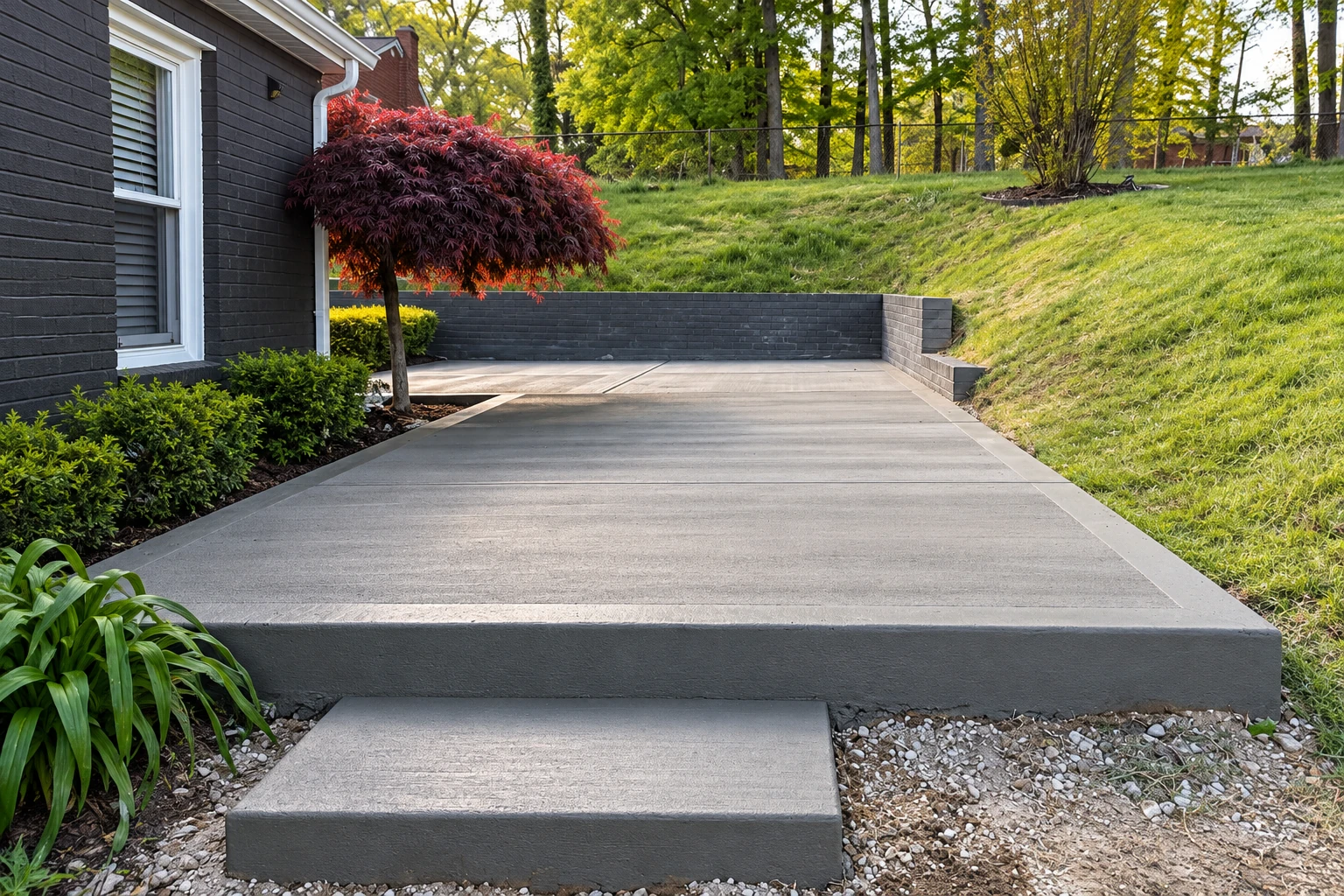
Plenty of houses have a driveway, walk or patio poured right up to the wall that needs piers. When that's the case, we use concrete cutting to take out a clean section instead of breaking up the whole slab, and if the old driveway was cracked and tipped along with the house, we can handle concrete driveway building once the house is back up.
Piers under the settled section
This suits most houses where one corner or one wall has dropped, because we underpin only the part that moved and leave the rest of the foundation alone. The engineer's plan sets how many piers go in and where.
Raising the whole house
When the whole foundation has failed, the house is usually separated from it, raised on hydraulic jacks and held on temporary supports while a new or extended foundation goes in below. It's a much bigger job, and a house raised up can be more prone to earthquake damage, so I'd only go that way when piers under the settled part won't do it.
What happens after you call about raising your foundation
Call or send the form
Call (925) 468-2730 or send the form with your address and where you've seen the settling. We'll set a time for me to come out.
I measure and write it up
I measure, look at where the house has dropped and where the water runs, and ask what sits along the walls that we'd have to dig around. You get a written estimate broken out line by line, so you can see what each part costs before you decide.
We check the layout first
Before anything is dug, we check the pier locations against the engineer's plan, because a pier in the wrong place is hard to undo. Then our crew opens up the ground along the settled walls.
Lift, backfill and wrap up
I'm on site to run the lift, which goes slowly toward the original height. Afterward we backfill, clean up and tell you plainly when any concrete we poured back is ready to use.
Foundation raising or just patching the cracks?
Fix the support first, then the cracks.
Patching the drywall and sealing the slab cracks costs less and looks finished the same day. If the footing is still sinking, though, the cracks come back and you pay twice. The piers end up buried where nobody sees them, which is exactly why they're the first thing people want to trim from the budget.
My advice is to put the money into the support first, with the piers the engineer's plan calls for in the places it calls for them, and save the cosmetic repairs for after the lift, once the house has stopped moving. Cracks patched before then usually just open again.
Examples of concrete work
Look through these examples of concrete work, from driveways and patios to foundations and footings, to see what the trade can build.
Get a written estimate for raising your foundation
Send your address and notes on where the house has settled, like the corner that dropped or the doors that stick. We reply within one business day, and I come out for a free on-site estimate with no obligation.
Why Pleasanton homeowners call Pleasanton Concrete Company to raise a foundation
The owner measures and runs it
I come out to measure and write the estimate myself, and I'm on site when our own crew sets the piers and runs the lift. The person who priced your job is the one making sure it gets built that way.
Commercial job habits, home scale
I learned on a big commercial concrete outfit, where everything got checked before a truck showed up. I started this business in Pleasanton in 2023 to bring that same checking to houses like yours.
Licensed and fully insured
We're licensed and fully insured, which matters when a crew is digging along your foundation. Our work is backed by our satisfaction guarantee.
We find the right office first
Before work starts, we confirm which city or county office covers your address, since a house in Pleasanton answers to the city's building official and a house a few miles over may not. Call (925) 468-2730 with your address and we'll start there.
Questions about raising a foundation
How much does foundation raising cost in Pleasanton?
The cost comes down mostly to how many piers the engineer's plan calls for, so nobody can give you an honest number before that plan exists. A long run of wall, hard digging or a driveway that has to be cut and poured back pushes it up, while one settled corner with open ground around it keeps it down. My written estimate lists each piece so you can see what's driving your number.
Should I use push piers or helical piers for my house?
Push piers usually suit the main body of a house, while helical piers are the usual pick for lighter parts like porches, additions and garages that don't weigh enough to drive push piers down. Helical piers also fit tight spots like crawl spaces where the equipment for driving push piers can't get in. The engineer's plan settles which one your house gets, and we build to it.
Will raising my foundation make the house perfectly level?
We lift back toward the original height, not to a promise of perfectly level, because a house that settled years ago has often had its framing, floors and finishes shift along with it. The slow lift gives those finishes their best chance, and I'll tell you before we start what I expect to see.
How do I know if foam lifting will work instead of piers?
Ask the engineer, because foam isn't always the answer, and even one company that makes lifting foam says it may not be an option for a building with severe settlement. If the house itself has sunk, piers down to more stable soil are usually the fix.
What is the best way to compare foundation raising bids?
Ask each contractor whether their plan extends your foundation down to more stable soil or raises the house onto a new or extended foundation, because those are very different jobs. Then check that an engineer's plan sits behind the pier layout and that the bid breaks out the digging, the piers and any concrete that gets cut and replaced.
What license does a contractor need to raise a house in California?
California's license classes put raising, lowering and underpinning a structure, its foundation included, under the building moving and demolition contractor. That class doesn't cover alterations, additions, repairs or rehabilitation of the parts of the house that stay, so ask any contractor how those parts of the job will be handled.
Has your house started to settle?
I come out, measure and write up an estimate line by line, so you can see what's in the price.
Work that often goes with it
Foundation raising in Pleasanton and the cities nearby
In Pleasanton, the city's building official issues the permit you get before work to alter, repair or move a building or structure, and raising a foundation is repair work on the structure itself. The city's exemption for ordinary repairs doesn't cover removing or cutting away a structural beam or load-bearing support, so we don't count on it here and treat the job as permit work until the city says otherwise. When a permit is needed, we take care of the application and the inspections and keep you posted. If you'd like to ask yourself, the City of Pleasanton takes calls at (925) 931-5630, Monday through Friday from 8 a.m. to 5 p.m.
We're based in Pleasanton and work in the cities around it, across the East Bay and down into the South Bay. Plenty of houses here have a garage, porch or room added years after the house went up, and that's often where we're called to look, so we size up those additions separately from the main house, the same way we do on jobs in Dublin and Livermore.