Concrete retaining walls in Pleasanton CA - level ground that stays put
Slope sliding onto your patio or a yard you can't use? We build poured and block walls with drainage behind them.
- Licensed and fully insured.
- Free in-person estimates.
- We reply within 1 business day.
What goes into building a retaining wall in Pleasanton?
A concrete retaining wall holds back a slope so you get level, usable ground and soil that stays where it belongs. Pleasanton Concrete Company builds them in poured concrete or block for homes in Pleasanton and the cities around it, across the East Bay and down into the South Bay.
Most calls start with a slope that won't stay put or a yard that's more hill than lawn. The price turns mostly on how long and tall the wall is, whether it's poured or block, what it has to hold up, the drainage behind it and whether a truck can reach the spot. The schedule turns mainly on whether the city needs a permit and how easy your site is to get into, and my written estimate prices each of those, so you get your own figure.
Is a concrete retaining wall right for your yard?
Dirt on the patio
If a bank sheds dirt onto your patio or walk every rain, a wall holds it back.
A yard that's all slope
Cutting a slope into a level terrace gives you room for a lawn, patio or pool.
Cars parked above a bank
When cars park near the top of a slope, the soil under them needs something solid holding it.
An old wall leaning out
A timber or stacked wall that leans, bulges or rots is usually ready for a concrete replacement.
How we build a concrete retaining wall
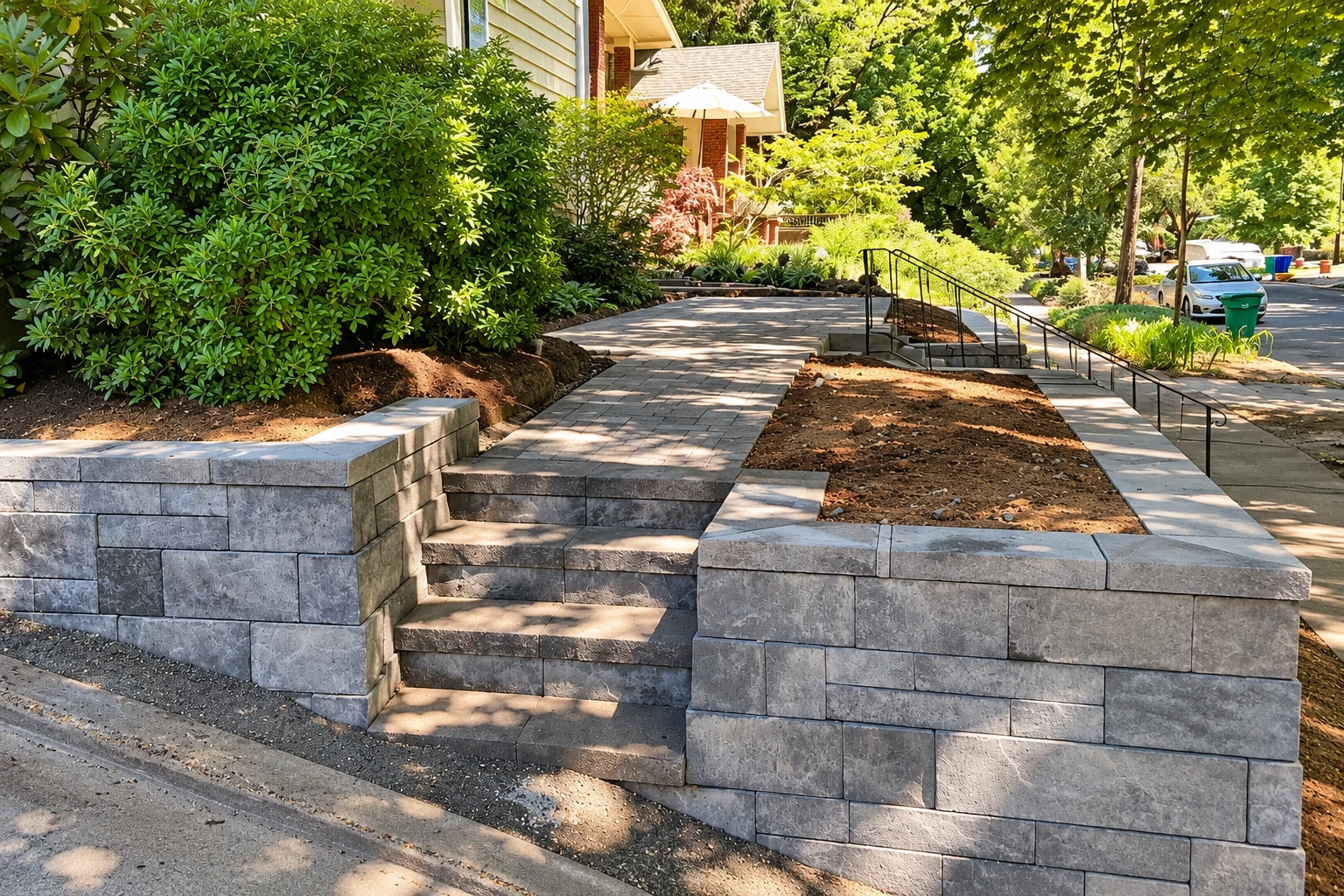
Before I price anything, I ask what sits above the wall and where your property line runs, because those two things decide whether poured concrete or block fits better. Then we mark out the wall, dig down for the footing, the wide concrete base the wall stands on, and either set forms and rebar, the steel that holds concrete together, for a poured wall, or stack block and lay reinforcement into the soil behind it in layers. Drainage goes in behind the wall as it rises, and we finish by backfilling, grading so water runs away from the wall and the house, and cleaning up.
A wall usually makes room for something else. The level ground behind it is a natural spot for one of our concrete pool decks, a shed or workshop on that ground calls for concrete floor installation, and when a path has to climb past the wall, we build concrete steps into the same plan so everything lines up.
Poured concrete wall
A poured wall stands on rebar and a deep footing, so it's rigid. One technical guide recommends it for walls holding up heavy vehicle traffic or sitting next to a building's foundation, and where a block wall's soil reinforcement would have to reach into the neighbor's property.
Block retaining wall
A block wall holds the slope with its weight, friction and layers of reinforcement laid into the soil behind it, so it needs room back from the face. Tight curves are easy in block but take expensive custom forms in poured concrete, and where a pump truck can't reach, the same guide says hand-placed block is the only workable option.
What happens after you call about a retaining wall?
Call or send the form
Call (925) 468-2730 or send the form with a few lines about your slope. We'll set a time that works for me to come out and see it.
I measure and price it
I measure, ask what the wall has to carry and where the water should go, then write the estimate line by line. You see the wall, the drainage and the digging priced separately, so nothing is hidden in one total.
We check forms against plan
Once any permit your wall needs is in hand, we stake out the wall and build the forms. I check the forms and steel against the plan before the concrete truck is called.
We build and hand over
Our crew builds the wall, backfills and cleans up. Afterward I tell you plainly when the wall is ready to use, since concrete needs curing, a wait while it gains strength, before it carries load.
Retaining wall layout comes before the pour
Once it's poured, the wall can't move.
Before any concrete is ordered, we stake the wall's line, check it against your property line and set the heights, so the wall lands where you expect and the water has somewhere to go. A layout mistake caught at this stage gets fixed with a string line. After the pour, it means breaking concrete out.
The footing and the drainage get the same care, even though both are buried by the time we leave. They're the first things people want to trim to bring a price down, and I'd rather spend the budget there than on the face of the wall, because a good-looking face can't make up for what's under and behind it.
Examples of concrete work
Browse these examples of concrete work to get ideas for the shapes, finishes and layouts that might suit your own property.
Get a line-by-line estimate for your retaining wall
Send a few lines about your slope and a good time to visit, and we'll reply within one business day to set up a free on-site estimate. There's no pressure and no obligation.
Why Pleasanton homeowners call Pleasanton Concrete Company for retaining walls
The owner measures and runs pours
I come out to measure and write your estimate, and I'm on site to check the forms and run the pour. The person who priced your wall is the one making sure it's built that way.
Checked before the truck arrives
I spent years on a big commercial concrete outfit where everything got checked before a truck showed up, and I started this business in 2023 to bring that to homes. That's why your layout gets settled before we order concrete.
Licensed and fully insured
California sets one license classification for forming, pouring and finishing concrete and a separate masonry classification for concrete block walls. That matters on a retaining wall, because poured and block walls fall under different trades in the state's rules.
What concrete won't do, upfront
I'll tell you what concrete can't do, like stay free of every crack, before you agree to anything, and the work is backed by our satisfaction guarantee. Call (925) 468-2730 or send the form when you're ready to talk about your wall.
Retaining wall questions we hear
How much does a concrete retaining wall cost in the Bay Area?
Retaining wall construction in the Bay Area usually costs about $50 to $65 per square foot, and that's the going market rate across the region, not our price. Where your wall lands depends on its height, whether it's poured or block, what sits above it and how easy the site is to reach, so I'll measure and write you an estimate line by line.
Do I need a permit to build a retaining wall in Pleasanton?
A wall over 4 feet, measured from the bottom of the footing to the top of the wall, needs a building permit from the city, and so does a shorter wall supporting a surcharge. Shorter walls can still need a planning or zoning permit, and we check your wall against the city's rules, covered below, and handle the application when one is needed.
Does a retaining wall need drainage behind it?
Yes, one technical guide calls full drainage a must for poured and block walls alike, because neither is designed to hold back water. We build drainage behind the wall and include it in the quote, whichever type you pick.
What causes cracks in a concrete retaining wall, and will mine crack?
Concrete shrinks as it dries and moves a little with the ground, so most walls show some fine cracks, and I won't promise you one that stays crack-free. The rebar inside holds those cracks tight, control joints, grooves we plan into the wall, give it a chosen place to crack, and drainage keeps water from pushing on it.
How do I get ready for a retaining wall estimate in Pleasanton?
Know the wall's rough length and height, what sits above it and where your property line runs. Those are the things that decide poured versus block and shape the price, so having them ready makes the visit quicker.
Do I need to call 811 before building a retaining wall?
Yes, 811 gets called before any digging so underground utility lines are marked before excavation starts. We make that call before our crew digs.
Got a slope that needs holding back?
Ask for an estimate and I'll come out, measure the slope and write up the price line by line.
Work that often goes with a wall
Concrete retaining walls and Pleasanton's permit rules
In Pleasanton, building permits come from the city's Building and Safety Official, and a retaining wall 4 feet or less, measured from the bottom of the footing to the top of the wall, is exempt unless it's supporting a surcharge or holding back certain liquids. A surcharge is the city's word for extra load on the soil behind the wall, like a driveway, a slope or a building nearby. Even an exempt wall still has to meet the state building standards code and the city's municipal code, and it may still need a Planning or Zoning permit, which the city's Planning Division can answer questions about. Before work starts, we confirm which office covers your address, and when a permit is needed, we take care of the application and the inspections and keep you posted.
Soil is the other thing I ask about here, because about 37% of Alameda County's soil area is high shrink-swell clay, the kind that swells when wet and shrinks as it dries, and an older block wall installation guide lists organic and expansive soils as unsuitable to build on. We ask the same soil question on jobs in Dublin and Livermore, so we look at the ground under your wall before settling the footing.