Concrete patio construction in Pleasanton CA - a patio that drains and keeps its grip
Bare dirt, cracked pavers or a slab that holds puddles by the back door? We pour a patio that sheds water and stays safe underfoot.
- Licensed and fully insured.
- Free in-person estimates.
- We reply within 1 business day.
What does it take to build a concrete patio in Pleasanton?
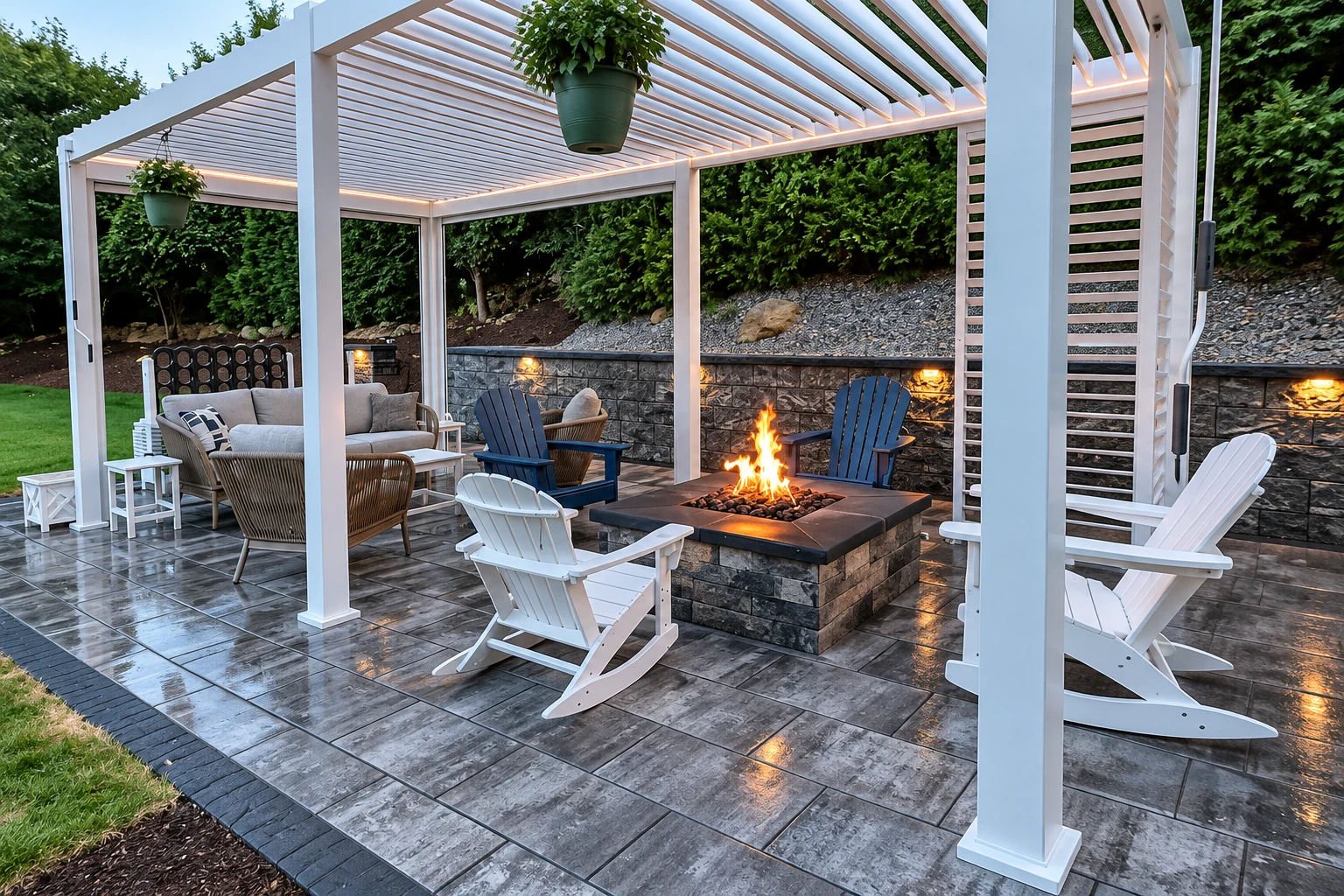
Concrete patio construction in Pleasanton means forming, pouring and finishing an outdoor slab that's sloped to carry rain away from your house and textured so it isn't slippery when it's wet.
Pleasanton Concrete Company is based in Pleasanton, and we build patios here and in the cities around it, across the East Bay and down into the South Bay. The price turns mostly on the size of the patio, how much we have to dig out and rebuild underneath, how far the concrete has to travel to reach your backyard, and the finish, since a broom texture takes far less handwork than a decorative one. The schedule turns on whether your address needs a permit, which we sort out before work starts, and on the curing wait before you can use the slab. My written estimate lists each of those as its own line, so you can see where the money goes.
Is a new concrete patio the right call for your yard?
Bare dirt by the door
Mud and dust get tracked inside, and a slab gives you a clean, level place to sit.
Old slab cracked and sinking
When the old patio has dropped or broken up, pouring new on a packed base beats patching.
Water pooling near the house
A new slab gets pitched away from your walls so rain runs off instead of sitting.
Pavers that keep shifting
Loose pavers trip people and sprout weeds, and one continuous slab ends that upkeep.
How we build a concrete patio
Before we pour, I settle two things with you: where the water will run and which broom texture you want, so the patio keeps its grip when it's wet. Our crew then digs out to firm ground and packs the subgrade, the layer the slab sits on, because a base that's only raked level settles later and takes the concrete with it. We set the forms with a steady fall away from the house and place rebar where the plan calls for it, since that steel holds the slab together and keeps any crack tight, and I check every form against the plan before the truck shows up. After the pour we float the surface, drag the broom across it and cut control joints, straight grooves that give the slab a chosen place to crack as it shrinks instead of a random line across the middle. Curing starts right after finishing, keeping the surface from drying out too fast so it reaches its full strength, and we treat it as part of the job rather than something left to you.
Two related jobs often come up at the same estimate. If you want a pattern pressed into the surface, that's our stamped concrete work, and if guests need a way to reach the patio from the driveway or a side gate, we can pour a concrete sidewalk while the crew is set up so the two meet at the right height.
Broom finish
This suits most patios, because the ridges a push broom leaves in fresh concrete give shoes and bare feet grip when the surface is wet. You pick coarse for more bite or fine for a smoother feel, and it's the simplest finish to build and keep up.
Stamped or patterned
This suits a patio where looks come first, since a pattern is pressed into the concrete while it's still soft. It takes much more care and experience than a broom finish, so the crew doing it should have done it many times before.
Exposed aggregate or color
This suits homeowners who want texture or a tint without a pattern, either by uncovering the stones in the mix at the surface or by working dry shake color, a powder troweled into the fresh slab, into the top. Like stamping, it takes extra skill to come out even.
What happens when you call about a patio in Pleasanton?
Call or send the form
Tell us where the patio goes and roughly how big you want it, and we'll set up a time for me to come out.
I measure and write it up
I measure, ask what the patio has to hold, from a table to a hot tub, and where the water should go. Then you get a written estimate, line by line, so you can see what each part of the job costs.
We check the forms, then pour
Before the truck arrives, the forms get checked against the plan, because once concrete is poured you can't move it. That's the step I won't rush.
We tell you when it's ready
Curing starts as soon as finishing is done, and we tell you plainly when the patio can take foot traffic and when it can take furniture. We clean up the site before we leave.
Where your patio budget should go first
Into the base, then the finish.
The base is buried on day one, so it's the easiest place to save money and the hardest to fix later. When a patio settles or cracks across the middle, the cause is usually underneath, not on top, and the only real fix is tearing it out and starting over.
So if the budget is tight, I'd keep the digging, packing and slope as planned and choose a plain broom finish. A decorative top can't save a slab on a weak base, but a broom-finished patio on a sound one has what it needs to stay flat and safe underfoot.
Examples of concrete work
Look through these examples of concrete work, from patios and walks to driveways and steps, to get a feel for finishes and layouts you might like.
Get a written estimate for your patio
Tell us the patio's rough size in square feet and the finish you'd like. We reply within one business day to set up a free on-site estimate, and there's no obligation to go ahead.
Why Pleasanton homeowners call us for patios
The owner runs your pour
I measure and write your estimate myself, then I'm on site to check the forms and run the pour while our own crew does the work. The person who agreed on your slope is the one watching when the concrete goes in.
Started in Pleasanton in 2023
I opened this company here in 2023 after years with a big commercial concrete outfit, where every slab was checked before a truck showed up. We bring that same checklist to a backyard patio.
Licensed and fully insured
Pleasanton Concrete Company is licensed and fully insured. It's the first thing worth asking any bidder, and we'll answer it before you have to.
Backed by our satisfaction guarantee
Our work is backed by our satisfaction guarantee, and I'll tell you up front what concrete can't do, like stay free of every crack. To get started, call (925) 468-2730 or send the estimate form.
Patio questions we hear most
How much does a concrete patio cost per square foot in Pleasanton?
A concrete patio in San Francisco usually costs about $6 to $15 per square foot, which is the going market rate there, not our price. Where your Pleasanton patio falls depends on its size, the digging and base work, access to the backyard and the finish, and our written estimate breaks those out line by line.
Which concrete finish is best for a backyard patio?
A broom finish is the best fit for most patios, because it stays non-slip when the surface is wet and it's the simplest to get right. Choose stamped, exposed aggregate or color when the look matters most, and make sure the crew has real experience with that finish.
Do I need a permit to build a concrete patio in Pleasanton?
The city's list of permit requirements and exemptions doesn't settle it for patios, because its no-permit list names sidewalks and driveways and leaves patios out. Pleasanton's Building and Safety Official issues the permit needed to build or alter a structure, so we confirm what applies to your address before work starts. When a permit is needed, we handle the application and the inspections and keep you posted.
Does a concrete contractor need a license in California?
Yes, California requires a state license when the job needs a building permit, uses additional workers or costs $1,000 or more in labor and materials. The Contractors State License Board issues the concrete contractor license, which covers forming, pouring, placing and finishing flat concrete like a patio.
What causes a concrete patio to crack?
Most cracks come from concrete shrinking as it dries, a base that settles underneath, or joints that were cut late or skipped. No slab stays free of every crack, so we pack the base and cut the control joints on time to keep cracks in the joints where they belong.
How do I clean and maintain a concrete patio?
Clean it as needed with a hose or a pressure washer and a mild detergent. One trade guide comparing stamped and exposed aggregate finishes says both need resealing every few years, so plan on that for a decorative patio.
Ready to plan your new patio?
Ask for an estimate and I'll come out, measure the space and write up the price line by line.
Other work that goes with a patio
Concrete patio construction and Pleasanton's rules
In Pleasanton, the size of your patio can change what the city asks for. The city says a Planning or Zoning permit may still be required even when no building permit is, and it requires forms or plans for any project that creates or replaces 2,500 square feet or more of impervious surface, the city's term for hard cover like concrete that rain can't soak into. Before work starts we confirm which office covers your address, and I add up every square foot of new and replaced concrete on the estimate, patio, walks and all, so we know early whether your job reaches that line.
Backyards here often sit behind the house with only a narrow side yard for access, so we plan how the concrete gets back there and where the water goes before we set a single form. It's the same planning we do on patio jobs in Dublin and Livermore.