Garage floor concrete in Pleasanton CA - a solid slab that drains toward the door
Cracked, sunken or puddled garage floor? We pour the slab on a packed base, with joints planned so cracks stay narrow.
- Licensed and fully insured.
- Free in-person estimates.
- We reply within 1 business day.
What should a garage floor slab in Pleasanton include?
Garage floor concrete in Pleasanton is a slab poured over well packed soil or gravel. The slab and the ground under it are sloped so water runs out the door instead of pooling, and the slab is thick enough to carry your car and whatever you store.
Most people who call about a garage floor are building a new garage, or they're looking at a slab that's cracked, sunken or holding water. The price moves with the size of the floor, how thick it needs to be for what parks on it, how much base work the ground needs, the steel inside it and the finish you pick. The schedule depends on that base work, the weather on pour day and whether your address needs a permit. I write all of it into the estimate line by line, so you can see what's in the price.
Is a new garage floor slab right for your garage?
Building a new garage
A new garage needs a slab sloped toward the door and thick enough for what parks on it.
Water pooling on the floor
When water from wet tires sits in low spots instead of running out, the floor isn't sloped right.
Sinking or uneven sections
A floor that has dropped or tipped usually sits on a base that settled with the dirt.
A shop or heavy storage
A workshop, a truck or heavy shelving needs a slab built to carry more than one car.
How we pour a garage floor
I start by laying out the floor and setting its height so the slab falls toward the door, because water should leave the garage, not run back toward the house. Our crew gets the base ready and packs it, then sets the forms and places rebar, the steel bars that hold the slab together if it cracks. We pour early in the day because midday heat leaves a weak, dusty top. Then we finish the surface and cut control joints, shallow grooves that give the slab a planned place to crack, before it cracks somewhere on its own. I'm honest that a garage slab can crack, so our quote shows how the joints and reinforcement help keep cracks narrow and in planned lines. If you're putting tile, epoxy or stored goods on the floor, tell us early so we can plan for moisture coming up from below.
A garage floor often connects to other work. If you'd like color, a stain or a pattern on it, that's decorative concrete, and we price it as its own line. On a lot cut into a hill, we plan any concrete retaining walls beside the garage together with the slab so the grades match. The concrete driveway out front should meet the floor at the door without a lip that traps water.
Smooth trowel finish
This is the usual garage floor. It's a slick surface that sweeps clean and takes most coatings well, though it can get slippery when it's wet.
Broom finish
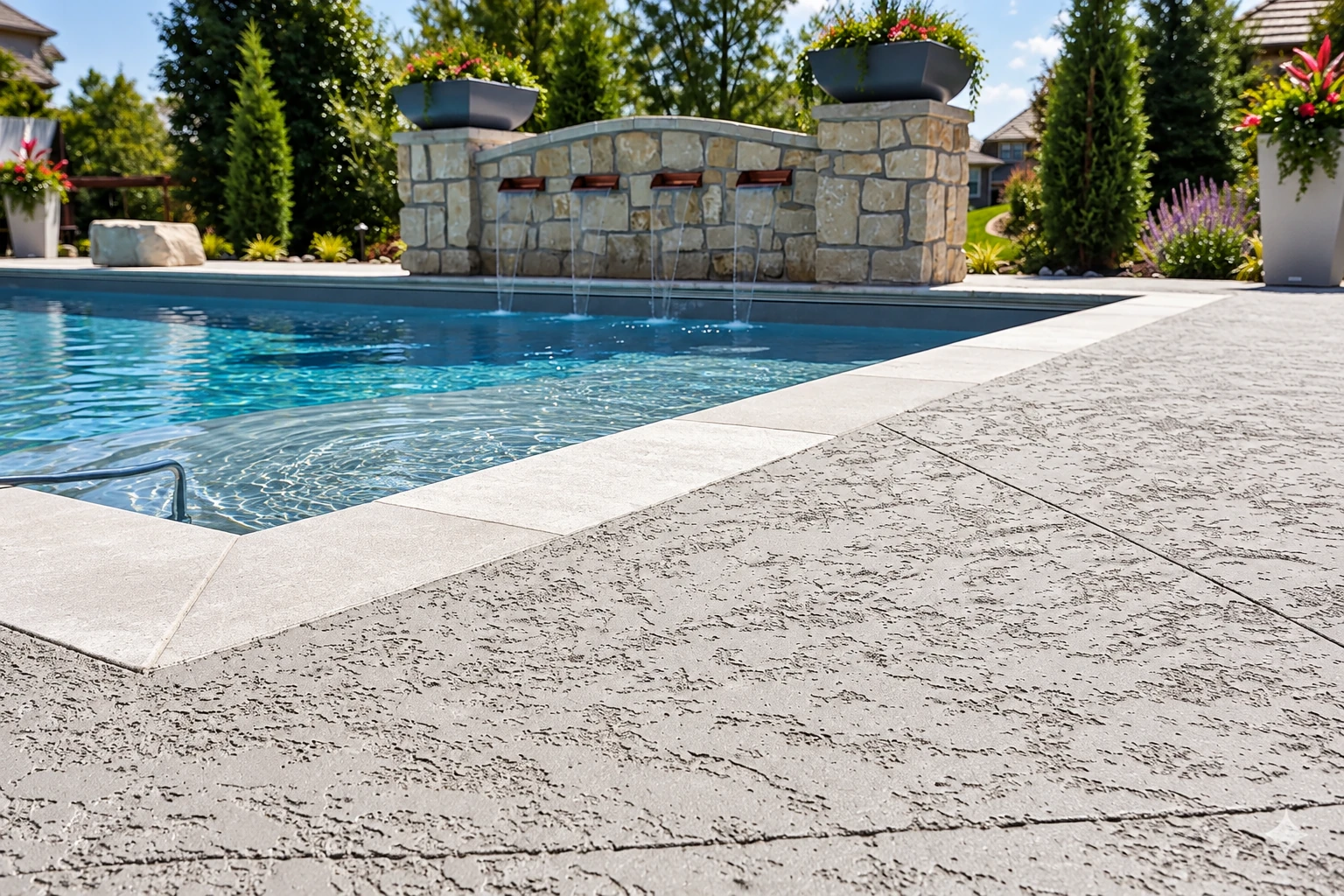
We drag a stiff broom across the wet surface to leave a fine texture for grip. It suits a floor that sees wet tires, a slab near the door or a garage that doubles as a work area.
What happens after you call about a garage floor in Pleasanton?
Call us or send the form
Tell us the garage size, what will park or sit on the floor and any covering you're planning. Then we'll set a time for me to come out.
I measure and write it up
I measure the garage, ask what the concrete has to carry and where the water should go, then write the estimate line by line. Thickness, base work, steel, joints and finish each get their own price, so you can compare our bid with others.
We check forms, then pour
Before we pour, we check the forms against the plan so the slope and edges end up where we agreed. Afterward, we tell you plainly when the floor is ready to use.
Base or finish on a garage floor?
Put the money under the slab first.
The base is what your garage slab sits on. It's buried on day one, so it's the first thing people want to trim when the budget gets tight. I'd cut the fancy finish before I'd cut the base. A nice top on poorly packed ground settles and cracks with the dirt. You can add a coating later, but once the slab is poured, the base is out of reach.
Examples of concrete work
Look through these examples of slabs, patios, driveways and walls to get a feel for finishes and layouts before we talk about your garage.
Get a line-by-line estimate for your garage floor
Put your garage size and any planned floor covering in the form, and we'll reply within one business day about a free on-site estimate. There's no pressure and no obligation, and I write the price out line by line.
Why Pleasanton homeowners call Pleasanton Concrete Company for garage floors
The owner measures and runs the pour
I measure and write your estimate myself. Our own crew does the work, and I'm on site to check the forms and run the pour, so the person who priced your floor is the one watching it go in.
Commercial checks, in Pleasanton since 2023
I spent years with a big commercial concrete outfit, where everything got checked before a truck showed up, and I started this business in Pleasanton in 2023. That's why we settle your layout, slope and joints before any concrete arrives, because once it's poured, you can't move it.
Licensed and fully insured
We're licensed and fully insured, and you're welcome to ask about both at the estimate. When you're ready, call (925) 468-2730 or send us the form.
Garage floor questions we hear
How much does a new concrete garage floor cost in the Bay Area?
Installing a reinforced concrete slab in the Bay Area usually costs about $9 to $16 per square foot, and that range doesn't include staining or stamping. Where your floor falls in that range depends on its size, thickness, base work and steel, and our written estimate shows each of those as its own line.
Will a new concrete garage floor crack?
It can, because all concrete tends to crack, and nobody can pour a slab that's sure to stay free of cracks. Steel inside the slab can't stop cracking, but placed at the right height it can keep cracks narrow, and the joints take up the movement that comes with heat and moisture changes. When you compare quotes, look for one that explains how cracks will be controlled instead of promising none.
How long does a new garage floor take to cure?
Concrete takes a month to fully cure, which is the slow hardening that gives it strength, but the slab should be walkable within 48 hours. The safe plan is to wait a week before heavier loads, so set up somewhere else for the car and the heavy storage that week, and we'll tell you plainly when it's ready.
How thick should a garage floor slab be in the Bay Area?
Standard home floor slabs in the Bay Area run four to six inches thick, and garage slabs sit at the thicker end. Ask every bidder what thickness their price covers, because a thinner slab can make one quote look cheaper, and ours puts the thickness in writing.
How do I keep moisture from ruining epoxy or tile on a garage floor?
Plan for moisture protection under the slab before it's poured. One concrete industry guide says it's required when the floor will be covered with tile, wood or a seamless coating like epoxy, and the same goes for things moisture can damage that sit on the floor. Moisture comes up through a slab from the ground, so the protection has to go in before the pour.
Does a concrete contractor need a license in California?
Yes. Anyone who contracts for work worth $1,000 or more in combined labor and materials needs a current, valid license from the Contractors State License Board. A license is also required when the project needs a building permit or the contractor uses employees, so ask for it and check it before you sign, whatever the size of the job.
Planning a new garage floor?
Ask for an estimate and I'll come out, measure the garage and write the price up line by line.
Work that often goes with it
What changes garage floor concrete in Pleasanton
Under Pleasanton's permit rules, the city's Building and Safety Official issues permits to build, enlarge, alter, repair or demolish a building or structure, and ordinary repairs need no application. Ordinary repairs don't include cutting away a load-bearing support or changing water, sewer, drainage or gas piping. That matters if your garage floor gets a drain, so we don't assume either way. Before work starts, we confirm which city or county office covers your address. When a permit is needed, we take care of the application and the inspections and keep you posted.
By one count, about 37% of the soil in Alameda County is high shrink-swell clay. It swells as it takes on water and shrinks as it dries, and that movement can crack a slab sitting on a poor base. So we remove the topsoil and soft spots, pack the base and set the joints where the slab can move. We do the same on jobs in Dublin and Livermore.